 Subscribe by RSS
Interview with Bill Fletcher Jr., racial-justice, labor, and international activist: “Right-wing populism is the « herpes of capitalism »”
Rising populism across Europe and USA might mean the end of the democracy project, as more and more politicians blame the democracy for the problems encountered by their countries. What should be done in order to curb populism and save the democracy project?
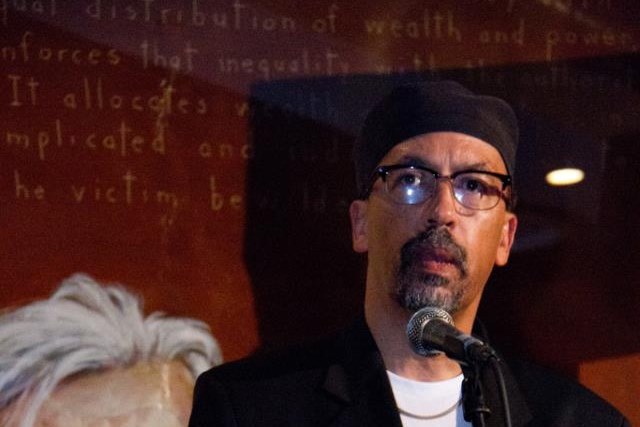
Bill Fletcher Jr., the author of „They’re Bankrupting Us!” (Beacon Press, 2012) is a long-time racial-justice, labor, and international activist, scholar, and author. He has been involved in the labor movement for decades, and is a widely known speaker and writer in print and on radio, television, and the Web. He has served in leadership positions with many prominent union and labor organizations, including the AFL-CIO and the Service Employees International Union. He accepted to explain his perspective on the fight against populism in the democracies of the 21st century, to the Romanian public, in an interview given to Vladimir Adrian Costea, for Europunkt.
Read Romanian version here.
Vladimir Adrian Costea: Do you think that there is a paradigm concerning the definition and understanding of democracy in the context of rising populism?
Bill Fletcher: We have to be clear that „populism” is a very broad category and that there is right-wing populism and left populism. The two are not at all the same.
The crisis brought on by neo-liberalism, including the massive increase in migrations, the polarization of wealth, the shift in locations and forms of production has produced popular outrage. The crisis of socialism, a crisis that started in many respects in the 1950s but increased in the 1980s, has weakened the ability of the Left to response to the larger crisis of neo-liberal globalization. Right-wing populists–and their subcategory, neo-fascism–have taken advantage of the weaknesses of the Left in order to position themselves as alleged challengers of the „establishment.”
Democratic capitalism has been under threat for years as a result of the growth of neo-liberal globalization. Democratic institutions have been weakened as we have witnessed the growth of a transnational capitalist class along with the growth of the politics and economics of austerity. As resources have narrowed for the working class and the middle strata, intense competition has arisen which right-wing populism has seized upon, suggesting that there is a legitimate population and an illegitimate population. To the extent that such a scenario is permitted and encouraged, democratic capitalism is under threat and any sort of broader popular democracy becomes less possible.
How can we approach populism? What are the manifestations of this phenomenon?
Again, this cannot be answered at the general level. Part of the question revolves around who is the „we” referenced in your question.
Right-wing populism is the „herpes of capitalism.” It exists in the body or system as an infection that appears particularly during periods of stress on the „system.” It represents a revolt against the future in that it sees the future in the past; an eternal search for some mythical period in which that particular population or nation-state was allegedly grand. Right-wing populism is antithetical to democracy and civilization because it contains a genocidal element in which the alleged illegitimate population is seen as the „Other,” a population that cannot be absorbed and is hostile to the „body.”
Left populism is dramatically different. It represents, more than anything else, a fight to expand democracy and to redefine democracy beyond the limits imposed on it by the system of so-called democratic capitalism. Left populism tends to be inclusive rather than exclusive and offers a broader definition of „the people” compared with that offered by right-wing populism.
What are the factors that influenced the dynamics of the relationship between democracy and populism phenomenon?
Populism, as a general category, tends to emerge when there is a larger crisis in the democratic capitalist system. Specifically, when the institutions of democratic capitalism appear to be not working and/or in the hands of an elite. To this situation there are right-wing vs left-wing responses.
The contours of the crisis can be quite broad. In the current situation, for instance, the massive migrations of millions challenges the definition of who constitutes a given nation-state. This compounds the fact that neo-liberal globalization has transformed the nation-state and delegitimized it in the eyes of millions because it does not appear to be operating as an instrument that even in limited ways is guaranteeing some social safety and equality for the population as a whole.
How has the relationship between democracy and populism changed after the victory of Donald Trump?
The victory of Trump was a victory for right-wing populism and its specific US variant, white nationalism/neo-Confederate. It represents the victory of an irrationalist movement that wishes to overthrow the gains of the 20th century and to transform the US state into nothing more than an instrument of open repression. There is no room for compromise with Trump’s right-wing populist movement. The objectives of this administration challenge humanity.
Separately, there has been evidence of a left populism, particularly as illustrated by the campaign of Senator Bernie Sanders. This campaign and its supporters, along with allied movements, e.g., the movement for Black Lives; the immigrant rights movement, represent the possible foundation for a broad left populism of the „new majority” that has been coming into existence.
What are the effects generated by populist speeches and actions in democratic regimes?
This, again, cannot be answered at the general level. If one is referencing the impact of right-wing populist speeches and actions, we see a polarization of populations and the tendency towards quasi-military actions, i.e., the rise of paramilitary formations; assassinations. Right-wing populist speeches and actions legitimize criminal assaults and other violence against ‘non-believers.’ Their aim, particularly in the form of neo-fascism, is to make democratic discourse impossible and to replace it with a state of fear and repression. The longer that right-wing populism is tolerated, the less likely it is for the continuation of any semblance of democracy.
To what extent populism influenced the development of democratic institutions?
The question was answered earlier. Right-wing populism deforms democratic institutions.
Vladimir Adrian Costea

Doctorand al Facultăţii de Ştiinte Politice, Universitatea din Bucureşti. A obținut Premiul III la secţiunea editorial, Gândacul de Colorado, “Vox populi, vox dei”, Premiile Presei Româneşti Nord Americane - NARPA 2014.


1 comentariu
[…] Citeşte varianta în limba română aici. […]